Occupant concerns
Document complaints, affected work zones and relevant indoor-air conditions.
→
Independent mould and moisture assessment for workplaces, managed properties and complex sites. Get clear evidence without losing sight of occupants, operations or compliance responsibilities.
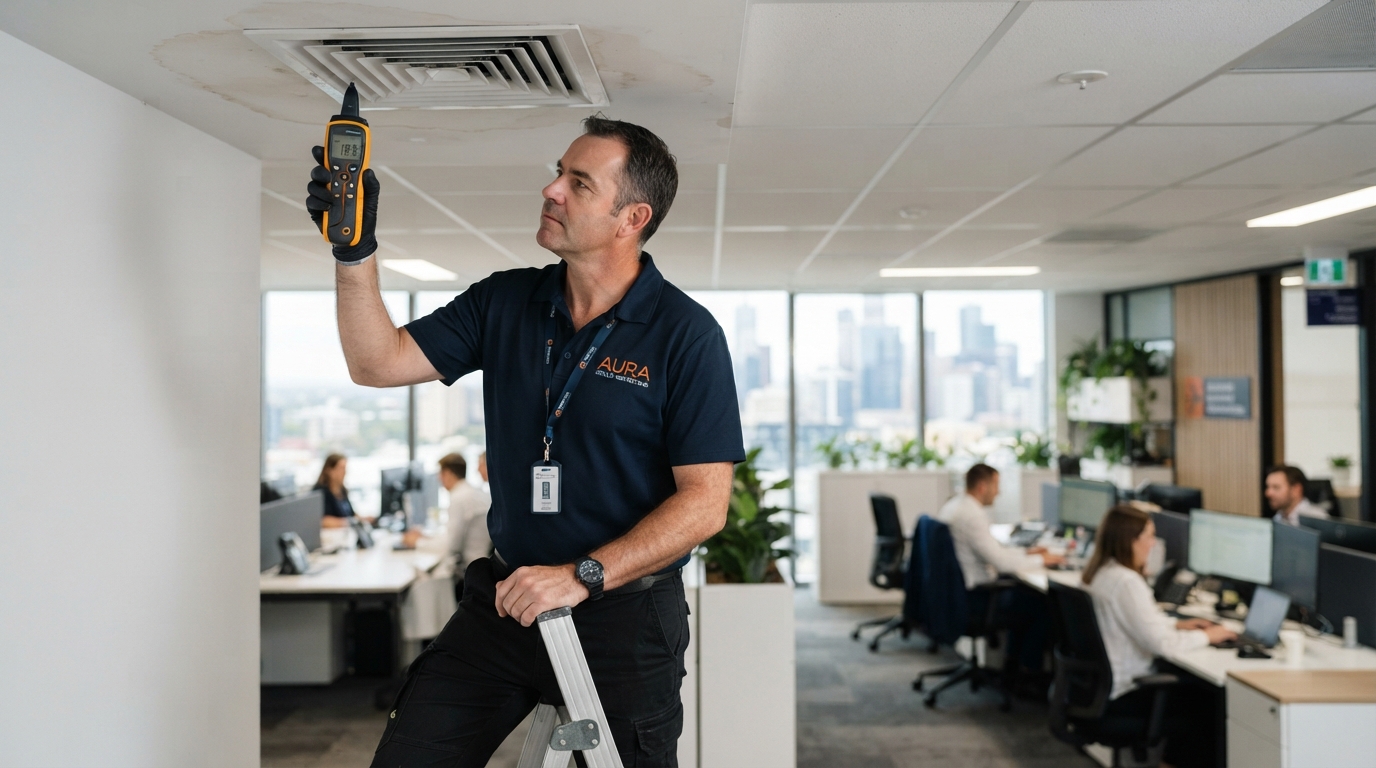
Commercial mould concerns can affect occupants, tenancy obligations, maintenance programs and business continuity. The inspection scope should reflect all four.
Document complaints, affected work zones and relevant indoor-air conditions.
→
Review visible conditions, HVAC context, wet areas and concealed-risk locations.
→
Plan access, timing and sampling around occupied spaces and critical activity.
→
Provide clear evidence for owners, managers, contractors, insurers and WHS teams.
→
We divide larger sites into practical inspection zones, so findings stay connected to location, use, occupancy and likely moisture sources.
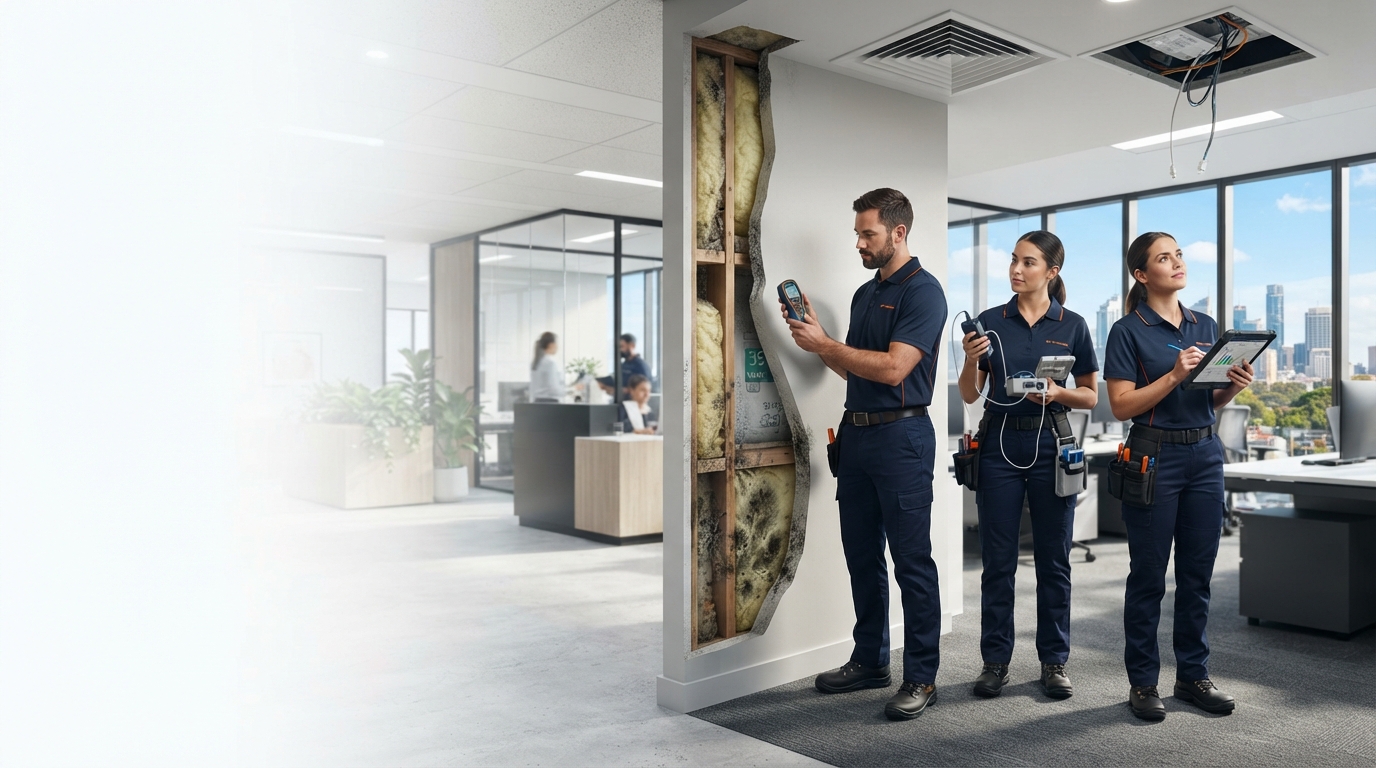
Workstations, ceilings, amenities, storage and tenant concern locations.

Condensation, leaks, airflow and concealed building-service areas.
Large-volume spaces, services, drainage and difficult-access conditions.
Common property, tenancy boundaries and coordinated stakeholder access.

Strategic sampling locations selected from site observations and concerns.

Your report gives decision-makers a common source of evidence for maintenance, remediation, tenant communication, insurance and workplace planning.
Independent findings help commercial teams move from competing assumptions to an agreed property response.
Prioritise maintenance, repairs and longer-term building controls.
Communicate findings and plan work around occupants and operations.
Support risk review with documented inspection and testing evidence.
Connect water damage, affected zones and recovery priorities.
Tell us about the site, affected zones, occupants and operational requirements.
Your trusted mould inspection specialists across Australia. Professional residential and commercial inspections, air quality testing and detailed reporting.
“Helping People Is Our Business”